
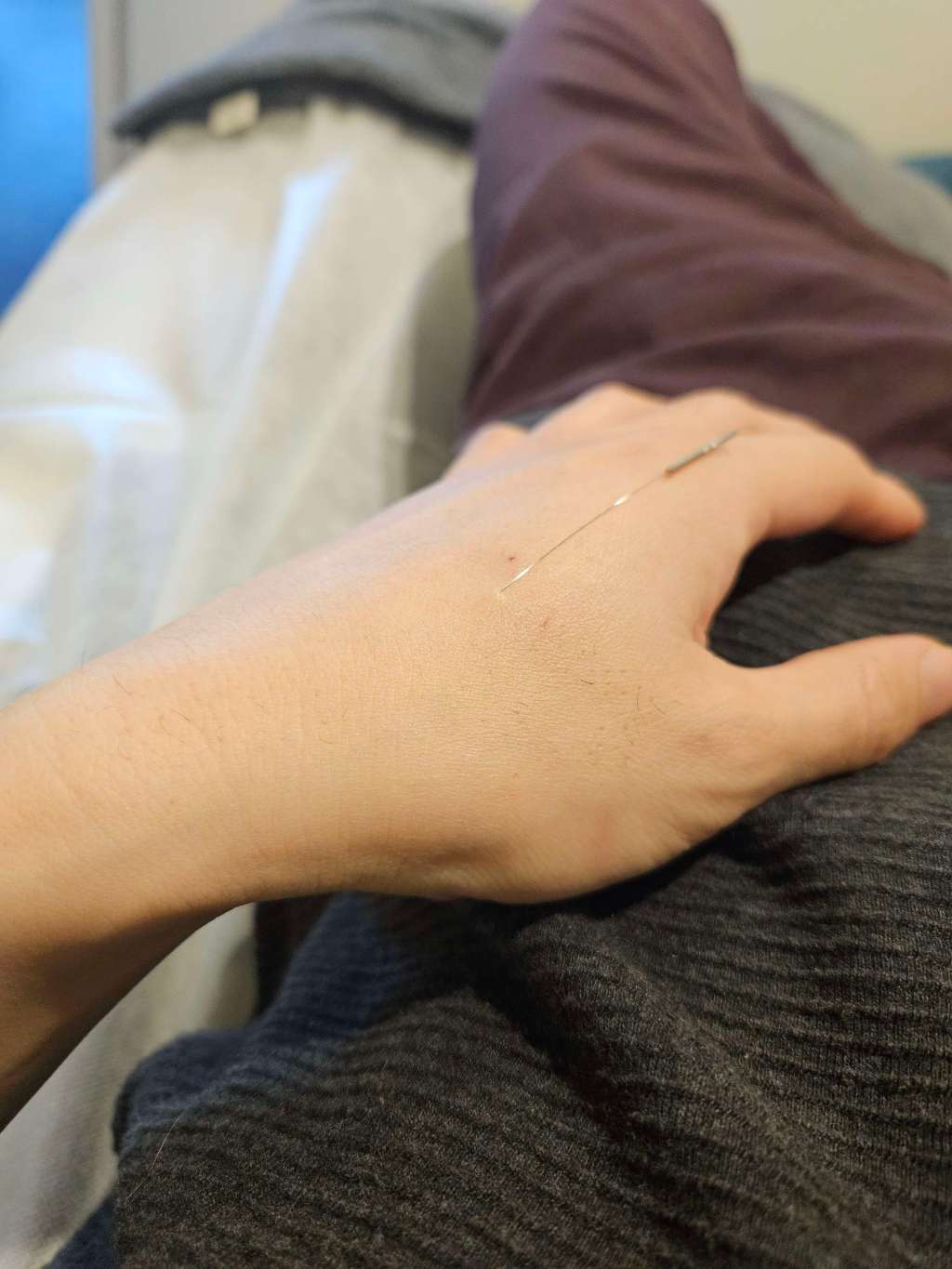
When you think of acupuncture, you might picture the traditional Chinese style with its rich history and complex theories. But there’s another approach that is gaining recognition for its gentle and highly effective techniques: Japanese style acupuncture.
While both styles share the goal of balancing the body’s energy to promote healing, they differ in several key ways. Understanding these differences can help you decide which approach is right for you.
1. The Needles: A Focus on Comfort
One of the most immediate differences you’ll notice is the needles themselves. Japanese style acupuncture is known for using extremely fine needles—often much thinner than a human hair—and a very shallow insertion technique. This focus on a gentle, almost imperceptible touch is central to the Japanese philosophy, making the experience incredibly safe and comfortable for the patient. You won’t feel a “heavy” sensation or a deep ache. In contrast, traditional Chinese acupuncture often uses thicker needles and deeper insertion to achieve a specific energetic sensation known as de qi, which is often described as a dull ache, tingling, or heaviness.
2. Diagnosis: Simplicity and Precision
The diagnostic process in Japanese acupuncture tends to be less complex than its Chinese counterpart. Practitioners often use a highly developed sense of touch, feeling for subtle changes in the abdomen and meridians. This less complicated diagnostic method can lead to a more direct and focused treatment plan, reducing the chance of a misdiagnosis and making the process feel more straightforward. Conversely, Chinese diagnosis is based on a more intricate system of pulse and tongue diagnosis. This complexity can make the diagnostic process challenging and, if the practitioner lacks extensive experience, may increase the chance of a misdiagnosis.
3. “No Pain, No Gain” is Not the Motto
If you believe that effective treatment requires some level of discomfort, you’ll be pleasantly surprised by the Japanese approach. The guiding principle is to work with the body, not against it. The goal is to make the treatment as comfortable and relaxing as possible, with no belief that pain is a necessary part of the healing process. Patients often find themselves drifting into a state of deep relaxation during the session.
This is a stark contrast to a key concept in some Chinese-style practices: the achievement of de qi. Many Chinese acupuncturists believe that for acupuncture to be effective, it is necessary to elicit this specific sensation—a feeling of soreness, heaviness, or dull ache at the point of insertion. This sensation, which translates to “the arrival of qi,” is obtained through various needle manipulations like twirling or flicking. For some practitioners, this feeling is a prerequisite for a successful treatment. In Japanese acupuncture, however, this strong sensation is not sought after, as the focus is on a gentle, subtle stimulation that still achieves profound results.


Leave a Reply